Apparel Supply Chain Management Software: 4 Best Solutions
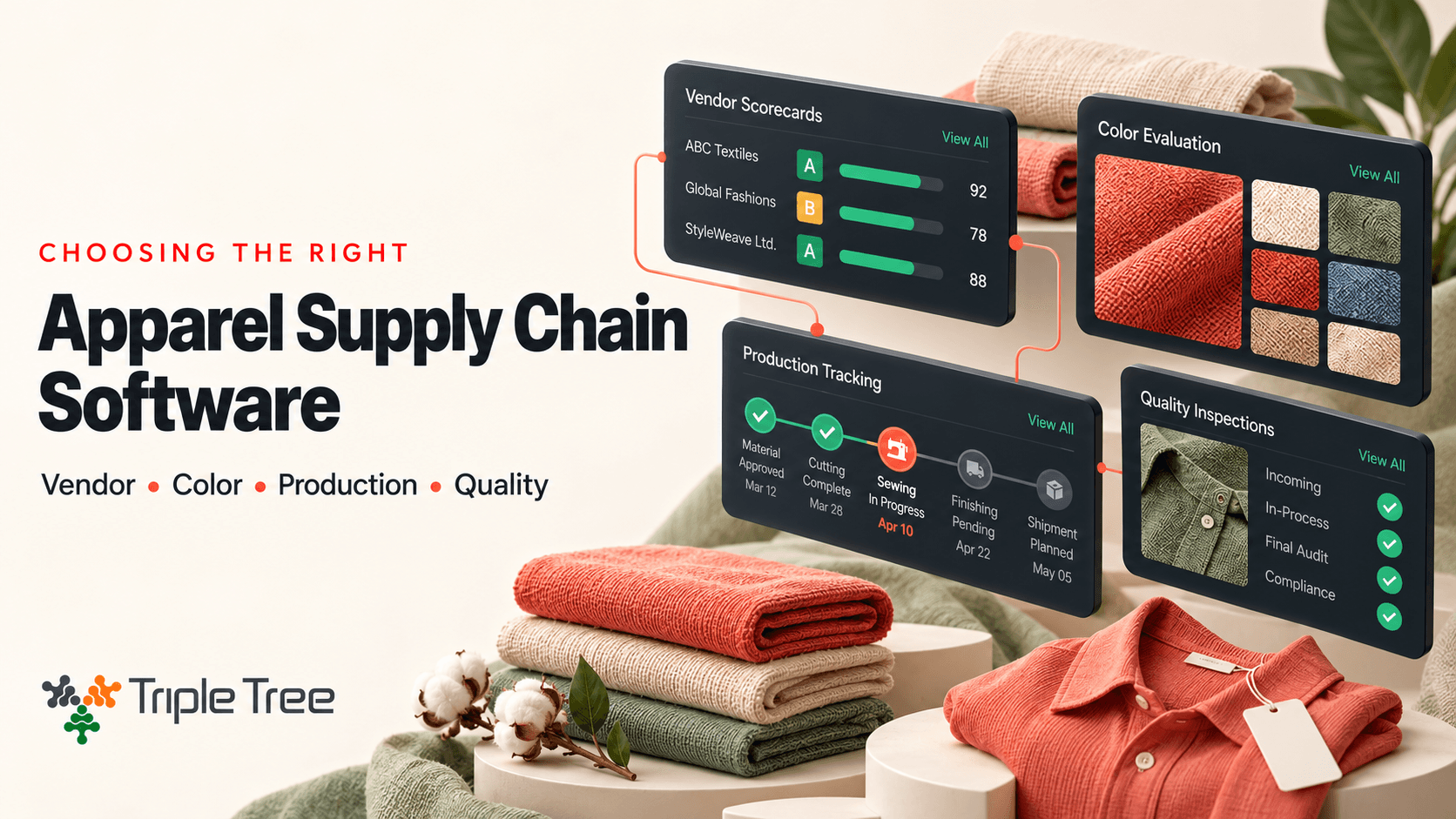
A delayed color approval, an expired vendor certification or a defect caught too late can put an entire apparel order at risk. Choosing the right software starts with knowing where those problems begin. Here’s what to look for across four key stages of your supply chain—and how Triple Tree’s solutions help you manage each one.

Triple Tree Solutions
Published
October 15, 2026
An apparel order passes through dozens of hands before it reaches a store shelf. A vendor gets approved, a lab dip goes back and forth, production starts, and an inspector signs off before shipment. When each of those steps runs on spreadsheets, email threads and courier boxes, small problems travel quietly downstream. A lapsed vendor certification becomes a compliance issue. A late color approval becomes a missed delivery date. A defect caught at final inspection becomes rework, a chargeback or a cancelled order.
The right apparel supply chain management software stops those problems where they start. But no single tool solves every stage well, and the market is crowded with broad platforms that do a little of everything and generic apps that were never built for apparel.
This guide breaks the apparel supply chain into four stages: vendor management, color management, production tracking and quality control. For each one, you will see what the stage demands, what to look for in software, and the solution we recommend. You will also learn how to decide where to start, whether that means one stage or all four.
What Is Apparel Supply Chain Management Software?
Apparel supply chain management software digitizes how brands, retailers, sourcing teams and manufacturers manage the work between design and delivery. It replaces manual tracking with shared, real-time data, so every team and supplier works from the same information.
Most options fall into three groups:
- Broad all-in-one platforms that cover many business functions. They offer breadth, but apparel-specific stages like lab dip approval or AQL inspection are often thin add-ons.
- Generic tools such as checklist apps, shared drives and spreadsheets. They are cheap to start but break down at scale and were not built for apparel workflows.
- Purpose-built apparel industry software designed for one stage of the supply chain. These go deepest on the problems that cost apparel brands the most.
1. Vendor Management and Compliance
Every quality, color and delivery problem traces back to a supplier. Yet many brands still judge vendors on memory, email history and scattered audit files. Certifications expire unnoticed, corrective actions go unfinished, and there is no objective way to compare one factory with another.
What to look for in vendor management software:
- Vendor performance scorecards based on compliance, delivery and quality data
- Audit scheduling and follow-up tracking until every finding is closed
- Corrective action plans with owners and deadlines
- Automated certification reminders before anything lapses
- Benchmarking across regions, categories and time periods
Generic supplier portals usually store documents well but stop short of scoring performance or driving corrective action.
Best for vendor management: VMAN
VMAN is vendor management and compliance software built for apparel, textile and non-apparel brands. It gives sourcing teams one record of every vendor's audits, certifications, performance and open actions.
Vendor performance scorecards and spider charts show strengths and weak spots at a glance. Built-in corrective action plans assign tasks and track them to completion. One global apparel brand described VMAN as giving them a single source of truth for partners, audits, performance and actions.
Best for: brands, retailers and licensing companies managing large or growing vendor networks.
See Vendor Performance in VMAN
Book Demo2. Color Management
Color is where development calendars slip first. Physical lab dips travel between mills and brand offices, approvals depend on who is looking under which light, and a shade that passed in the lab can shift in bulk. Each rejected round adds days, courier costs and wasted material.
What to look for in color management software:
- Objective evaluation using spectral data instead of visual judgment alone
- Brand-specific tolerance bands for lab dip and production approval
- Metamerism checks under multiple light sources
- Lab dip to bulk comparison across suppliers and seasons
- Automatic approval for submissions that fall within tolerance
Many color tools focus on measurement at a single desk or instrument. Fewer connect brands and suppliers in one shared approval workflow.
Best for color management: ColordesQ
ColordesQ is digital color management software that brings brands, mills and suppliers into one approval workflow. Suppliers check their own results against your standards before submitting, so you only review shades that are likely to pass.
Its color engine flags metamerism under multiple light sources, and tolerance bands enforce your standards consistently across every supplier. In-tolerance submissions can be approved automatically. The head colorist at one US sportswear brand reported their right-first-time hit rate for lab dips rose to 87%.
Best for: brands and mills managing color across many suppliers, materials and seasons.
Get a ColordesQ Walkthrough!
Evaluate color: solids and non-solids — all in one app!
3. Production Tracking
Once an order is placed, most brands lose sight of it until something goes wrong. Status updates arrive by email in different formats from different factories, and delays surface only when a ship date is already at risk. By then, the options are expensive: air freight, discounts or cancellations.
What to look for in production tracking software:
- Order-level and PO tracking across every vendor and factory
- Milestone and time-and-action tracking from pre-production to shipment
- Early alerts and predictive insights on delivery performance
- In-app approvals so submissions do not wait in inboxes
- Shared dashboards for brand teams, vendors and auditors
Planning modules inside broad platforms often record what should happen. Dedicated production tracking shows what is actually happening on the factory floor.
Best for production tracking: TrackIT
TrackIT is production tracking software for apparel and textile supply chains. It consolidates pre-production and production data from every factory into one live dashboard, so teams see what is on time, what is late and why.
Milestone and PO tracking show progress on every order. Predictive delivery insights flag risk before a date is missed. A leading$250M+ apparel manufacturer cut production delays by 40% after moving its tracking to TrackIT.
Best for: brands, sourcing teams and manufacturers managing high order volumes across multiple factories.
Explore TrackIT for your production management!
Explore TrackITREAD: The Complete Guide to Apparel Production Tracking & PO Management
4. Quality Control and Inspection
Quality problems get more expensive at every step they go unnoticed. On paper-based inspections, results reach the brand days later, measurements are retyped by hand, and patterns across factories stay invisible. When defects show up at final inspection, the cost of fixing them is at its highest.
What to look for in quality management software:
- Digital inline and final inspections on mobile devices
- Configurable inspection workflows, forms and AQL rules
- Defect reports linked to corrective action plans (CAPA)
- Live inspection views and dashboards across all factories
- Proof that inspections happen where and when they are reported
Generic inspection checklist apps can capture results, but they rarely adapt to apparel-specific workflows or connect findings to corrective action.
Best for quality control: QUONDA
QUONDA is digital quality management software for textile and apparel organizations. It replaces paper inspections with real-time data, so QA teams see defects as they are logged instead of days later.
Inspection workflows and custom inspection reports adapt to each brand's standards. Defect reports come with corrective action plans, and a Bluetooth measuring tape integration records measurements automatically. GPS location tags verify where inspections take place. QUONDA is trusted by 200+ apparel manufacturers across 12 countries, and J.Crew uses it as its official apparel inspection software.
Best for: brands, retailers, manufacturers and inspection agencies running inspections at scale.
See real-time inspections in QUONDA
READ: The Complete Guide to Textile & Apparel Quality Inspection
Read nowREAD: The Complete Guide to Textile & Apparel Quality Inspection
How to Choose: Start With One Stage or Cover Them All
VMAN, ColordesQ, TrackIT and QUONDA are four separate solutions. Each can be purchased and used on its own, so you only pay for the stage you need to fix. Together, they cover the full apparel supply chain from vendor onboarding to final inspection.
Start with your biggest bottleneck. Match your most expensive problem to the stage that causes it:
- Vendor risk or compliance gaps: start with vendor management
- Lab dip delays or color rejections: start with color management
- Late orders and missed milestones: start with production tracking
- Defects found too late: start with quality control
Add stages as you grow. Many teams begin with one solution, prove the value, and add the next stage when they are ready.
Or cover every stage at once. Brands ready to digitize fully can roll out all four together and gain visibility across the whole supply chain from day one.
Whichever path you choose, ask these questions before you buy apparel software solutions:
- Is it built for apparel workflows, or adapted from a generic tool?
- Can it be configured to your process without custom development?
- Will your suppliers actually use it, on desktop and mobile?
- Does it work with your PLM and the systems you already run?
- How quickly can you run a pilot and see results?
Final Takeaway
The best apparel supply chain management software is the one that fixes the stage costing you the most today, and can grow with you tomorrow.
VMAN, ColordesQ, TrackIT and QUONDA each solve one of those problems on their own. Used together, they give you complete visibility from vendor onboarding to final inspection. Brands including J.Crew, Levi's and Carhartt WIP already rely on Triple Tree to bring that visibility to their supply chains.
Not sure where to start? Our team will help you find the stage with the biggest impact.
Here is how the four stages compare at a glance.
| Stage | The problem it solves | What to look for | Triple Tree Solution |
|---|---|---|---|
| Vendor management | Compliance gaps and unclear vendor performance | Scorecards, audit tracking, corrective action plans | VMAN |
| Color management | Slow lab dip approvals and color rejections | Spectral evaluation, tolerances, metamerism checks | ColordesQ |
| Production tracking | Late orders and delays found too late | Milestone and PO tracking, delay alerts | TrackIT |
| Quality control | Defects caught after it is too expensive to fix | Digital inline and final inspections, CAPA | QUONDA |
Talk to a supply chain expert!
Book a slotFAQs
1. What is apparel supply chain management software?
It is software that digitizes how apparel brands and their suppliers manage vendors, color, production and quality. It replaces spreadsheets and email with real-time data that every team and supplier can see.
2. How is apparel industry software different from generic supply chain tools?
Apparel industry software is built around apparel workflows such as lab dip approvals, AQL inspections, measurement checks and seasonal vendor programs. Generic tools need heavy customization to handle these, if they can at all.
3. Can I buy VMAN, ColordesQ, TrackIT or QUONDA separately?
Yes. Each solution is sold and used independently, so you can start with the stage that needs the most attention. You can add others later or roll out all four together.
4. Which stage should I digitize first?
Start where delays and costs are highest. The bottleneck checklist above maps common problems to the right starting stage.
5. Do these solutions work with PLM systems?
Yes. Triple Tree's solutions work alongside your existing systems. ColordesQ, for example, can create color jobs directly from PLM data.
6. How long does implementation take?
Timelines depend on company size and scope. Most rollouts begin with a pilot configured to your workflow, and customers typically see value within weeks.
TRENDING NOW
Community Favorites
WHITE PAPER
Beyond the Spectrophotometer: One Color Standard for Every Material in Your Collection
Triple Tree Solutions
Oct 12, 2026
COLOR
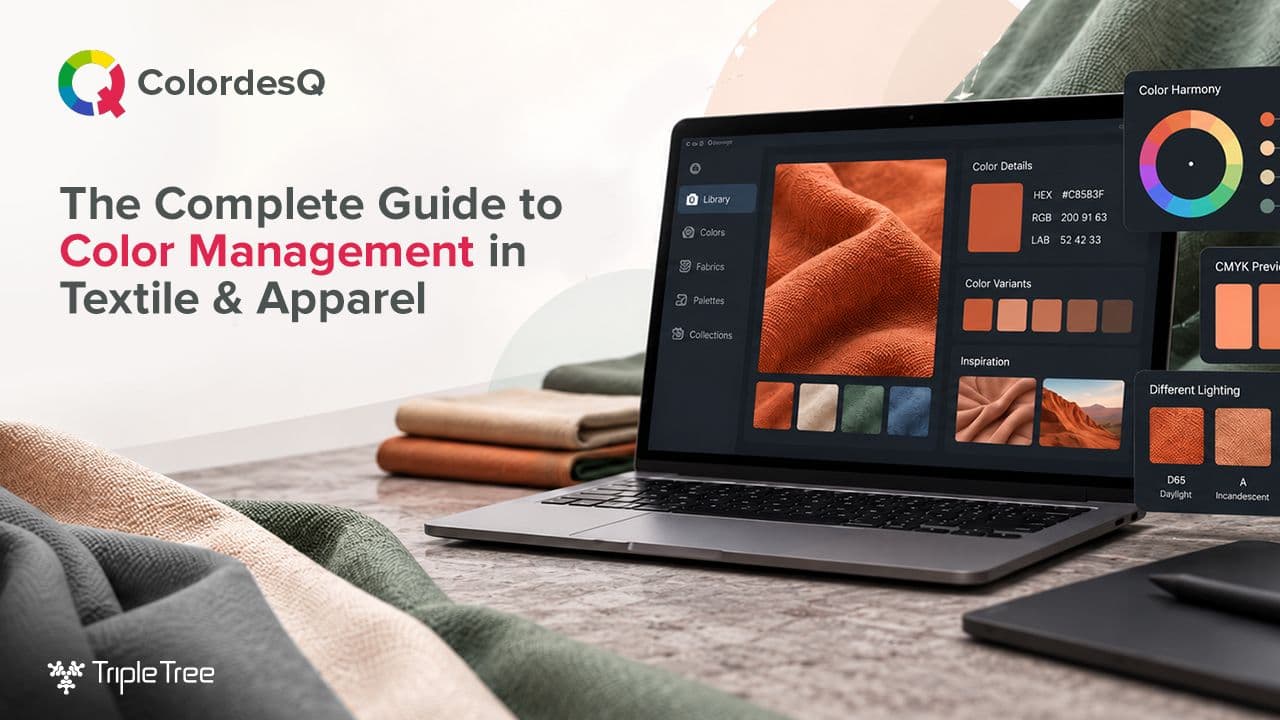
The Complete Guide to Color Management in Textile & Apparel
Triple Tree Solutions
Oct 6, 2026
PRODUCTION
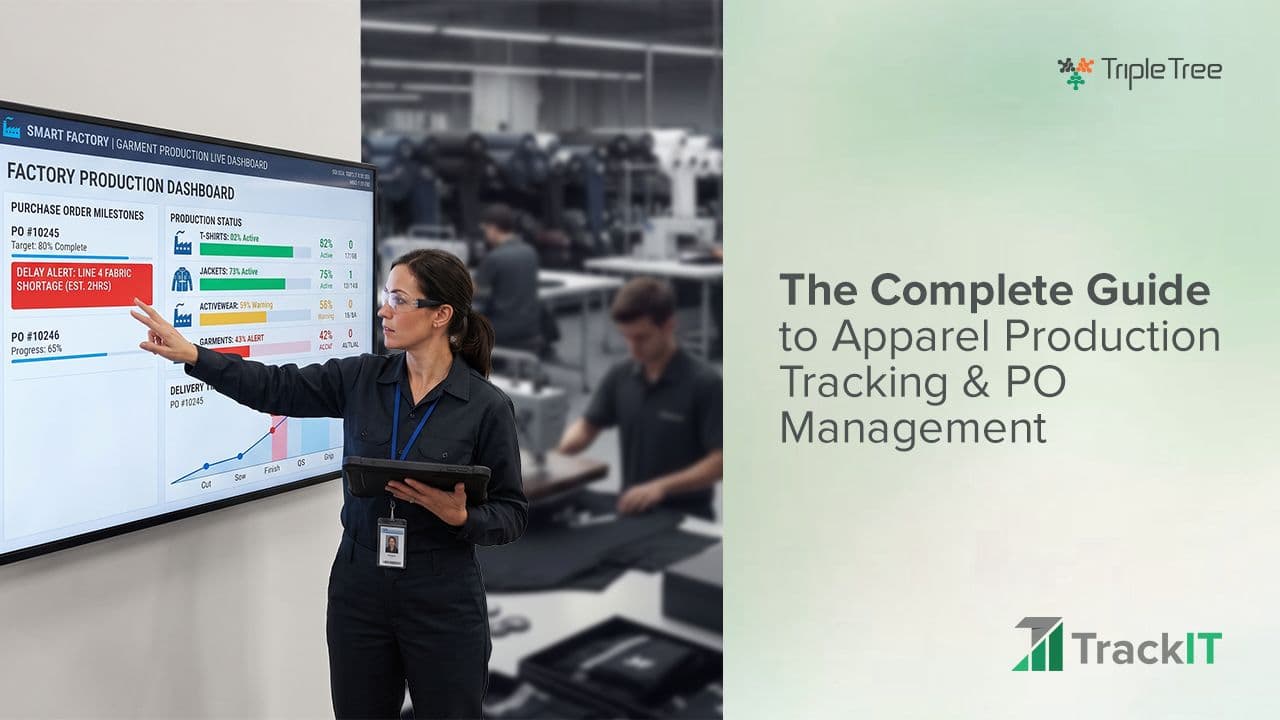
The Complete Guide to Apparel Production Tracking & PO Management
Triple Tree Solutions
Jul 29, 2026

Industry Events
What to Expect at PI Apparel’s Fashion Technology Show NYC 2026
Triple Tree Solutions
Jul 15, 2026