What Is Inline Quality Inspection in Garment Manufacturing?
Learn how inline quality inspection catches garment defects during sewing, what inspectors check, and how to use inline data to reduce rejects at final inspection.

Triple Tree Solutions
Published
November 25, 2026
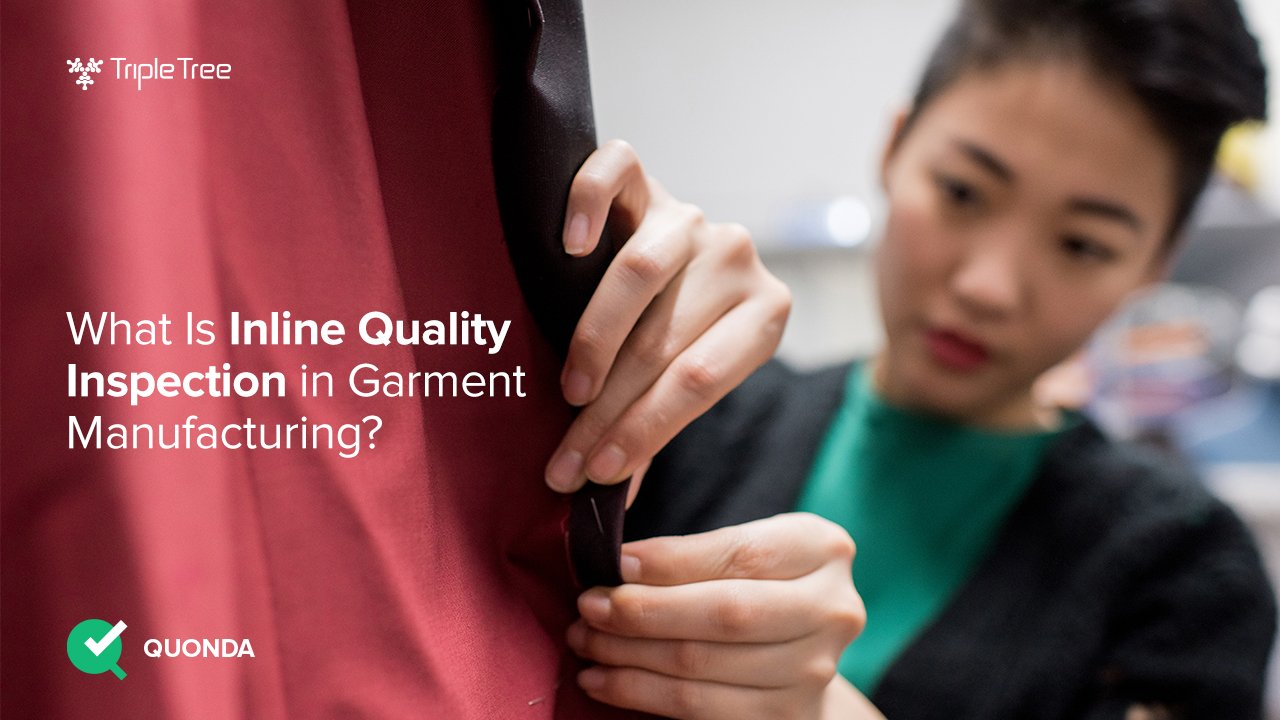
A skipped stitch at the third operation of a sewing line costs very little to fix on the spot. Found at end-of-line, after 30 more operations, the same defect means unpicking seams, re-sewing and sometimes scrapping the piece.
That is the problem inline quality inspection solves. It moves checks into the sewing line itself, so defects are caught while the garment is still being made and the operator causing them can correct the issue before the next bundle.
Inline inspection is one stage of textile and apparel quality inspection. This guide covers what it is, how it differs from final inspection, the common methods factories use, what inspectors check, and how to turn inline results into fewer rejects at the end of the line.
What is inline quality inspection?
Inline quality inspection is the checking of semi-finished garments during production, while pieces are still inside the sewing line and not all operations are complete. It is also called in-process inspection, during-production inspection or roving quality checking.
The goal is to stop defects at the source. Instead of sorting good garments from bad ones at the end, inline checks find the operation, operator or machine producing the defect and fix it while the order is still running.
Inline inspection can be run by the factory's own QC team, by the brand's QA representative visiting the line, or by a third-party inspection agency during production.
Inline inspection vs final inspection
Inline inspection prevents defects during sewing; final inspection decides whether a finished lot ships. Most factories need both.
| - | Inline Inspection | Final Inspection |
|---|---|---|
| When | During sewing, while garments are semi-finished | After production, on finished and packed goods |
| What is checked | Individual operations, stitching, seams, in-process measurements | Finished garments, workmanship, measurements, labels, packing |
| Sampling | Small random samples per operator or operation, repeated through the day | Statistical sample from the lot, usually based on AQL |
| Main question | Which operation or operator is creating defects right now? | Does this lot meet the buyer's quality standard? |
| Outcome | Operator feedback, machine adjustment, retraining | Pass, fail or re-inspection of the lot |
| Cost of a defect found | Low: fixed before more operations are added | High: repair, rework or rejection of finished goods |
A factory that relies only on final inspection learns about problems after the cost is already built into the garment. Inline checks reduce how many defects reach that final gate.
Common inline inspection methods
Factories usually combine two or three of these methods, depending on line layout, style complexity and buyer requirements.
Fixed checkpoints. A quality checker sits at a fixed station inside the line and checks semi-stitched garments after critical operations, such as collar attachment or pocket setting.
Roving (roaming) checks. An inline inspector moves between workstations, picks random pieces from bundles and checks one operation at a time. This covers the whole line without a checker at every machine.
Traffic light system (TLS). A roving inspector checks a small sample from each operator, commonly 5 or 7 pieces, several times a day. A typical rule is green for zero defects, yellow for one and red for two or more. Red usually triggers immediate correction and more frequent checks for that operator. Exact sample sizes and rules vary by factory and buyer.
Buyer or third-party inline inspection. Brands often send their own QA staff or an inspection agency to check garments early and mid-production, before problems spread across the order.
What inspectors check during inline inspection
Inline checks focus on what can still be fixed on the line. A practical checklist covers:
- Stitching: skipped, broken or uneven stitches, wrong stitch density, loose tension, puckering.
- Seams: open seams, seam slippage, uneven seam allowance, twisted or misaligned seams.
- Measurements: in-process points of measure against the spec sheet and tolerance, especially after critical operations.
- Construction: correct placement of pockets, collars, labels and trims; symmetry between left and right panels.
- Fabric and shade: fabric flaws missed at cutting, shade variation between panels in the same garment.
- Workmanship: raw edges, untrimmed threads, stains and marks from handling.
Each defect should be recorded with its type, the operation and operator, and severity. Without that detail, inline results show that defects exist but not where to act.
How to make inline inspection data useful
Inline inspection only reduces rejects if the results lead to action during the same shift. Paper sheets filled at the machine and summarized at the end of the day are often too late.
- Track defects by operation and operator. Repeated defects at one operation point to a specific fix: retraining, a machine adjustment or a change in method.
- Close the feedback loop quickly. The operator and line supervisor should see a red result while the bundle is still on the line, not in tomorrow's report.
- Follow up with corrective action. Record the root cause and the action taken, then recheck the operation to confirm the fix worked.
- Measure the trend. Defects per hundred units (DHU) by line, operation and style shows whether inline checks are improving quality over time. Track it alongside your other quality KPIs.
- Connect inline results to final inspection. If final AQL inspections keep failing on defects that inline checks already flagged, the problem is follow-up, not detection.
The common thread is speed and visibility. The closer inline data is to real time, the more of the order it can protect.
How Triple Tree supports inline and final inspection
QUONDA is Triple Tree's garment inspection software for inspections and final quality verification. Teams plan inspections with the Inspection Scheduler, follow results through the Live Inspection View, track inspector work in the Inspector Activity Dashboard and build Custom Inspection Reports to match each buyer's format. QUONDA is trusted by 200+ apparel manufacturers across 12 countries.
That connects what happens on the line with what passes at the final gate, so quality teams see where defects start and whether fixes are holding.
FAQ
What is inline inspection in the garment industry? Inline inspection is checking semi-finished garments during sewing, while pieces are still in the production line. It finds defects at the operation where they start, before more work is added to the garment.
What is the difference between inline and final inspection? Inline inspection happens during production and focuses on operations and operators. Final inspection happens after production, usually on an AQL sample, and decides whether the lot meets the buyer's standard.
How often should inline inspection be done? It depends on the factory, style and buyer requirements. Many factories using the traffic light system check each operator several times per shift and increase frequency for operators with yellow or red results.
What is the traffic light system in garment inspection? It is an inline method where an inspector checks a small sample of an operator's work and marks the result green, yellow or red based on defects found. Red usually triggers immediate correction and closer follow-up.
Catch defects before they reach final inspection
TRENDING NOW
Community Favorites
QUALITY
How to Measure Quality in Apparel Manufacturing: Key Metrics and Inspection Methods
Triple Tree Solutions
Nov 17, 2026
INSIGHTS
How to Reduce Downtime in Manufacturing: Causes and Strategies for Apparel Production

Triple Tree Solutions
Nov 11, 2026
INSIGHTS
Supplier Quality Management for Apparel: Audit Guide
Triple Tree Solutions
Oct 27, 2026
VENDOR MANAGEMENT
The Complete Guide to Vendor Management in Apparel and Textile
Triple Tree Solutions
Oct 23, 2026